Impact Factor
Call For Paper
Volume 12 Issue 10
October 2026
Download Paper Format
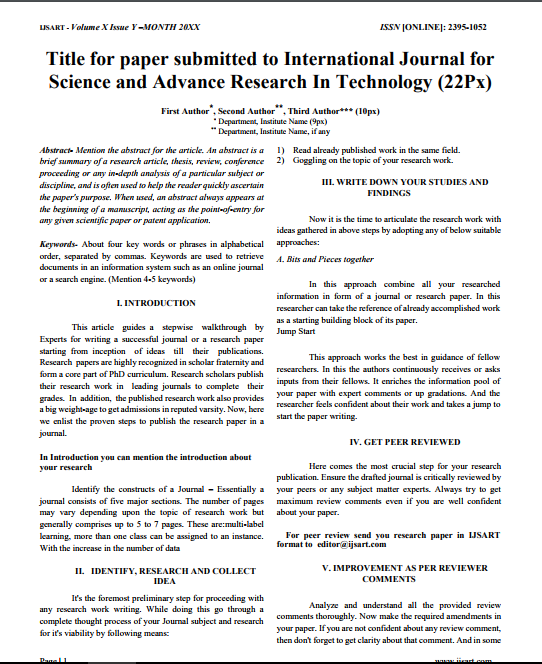
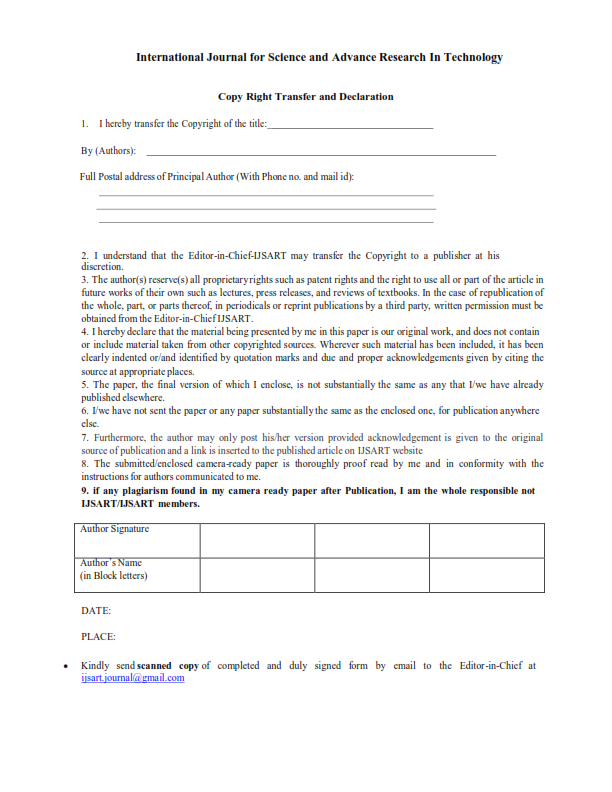
Copyright Form

Author(s)
Abstract
The Rapidly Increasing Volume Of Industrial Waste Material Poses A Severe Threat To Environmental Sustainability And Ecological Balance. Furthermore, The Commercial Production Of Synthetic Fibers Contributes Significantly To Global Warming Through Greenhouse Gas Emissions. In Structural Applications, Conventional Concrete Exhibits High Compressive Strength But Remains Inherently Weak In Tension. This Vulnerability Is Primarily Caused By The Presence Of Micro-cracks At The Mortar-aggregate Interface. To Mitigate This Weakness, Control Micro-crack Propagation Into Macroscopic Failures, And Enhance Tensile Properties, Fiber-reinforced Concrete (FRC) Is Widely Utilized. This Study Investigates The Integration Of Polypropylene Fiber (PPF)—a Synthetic Hydrocarbon Polymer—into Cement Concrete Mixes. A Comprehensive Laboratory Investigation Was Conducted To Evaluate The Structural Behavior Of This Material In FRC Applications. The Primary Objective Of This Research Is To Analyze The Influence Of Varying Polypropylene Fiber Lengths And Densities On The Fundamental Strength Characteristics Of Concrete, Specifically Its Compressive Strength, Split Tensile Strength, Flexural Strength, And Impact Resistance.
Keywords
Paper ID
IJSARTV12I6105695
Publication Date
June 17, 2026
Research Area
Civil Engineering