Impact Factor
Call For Paper
Volume 12 Issue 10
October 2026
Download Paper Format
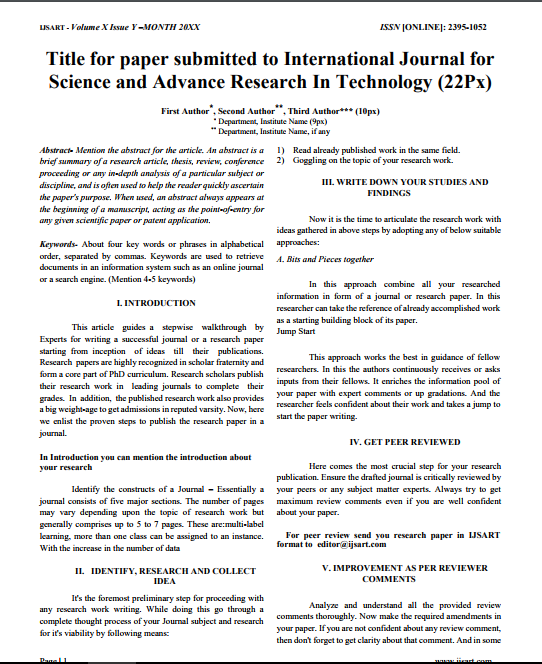
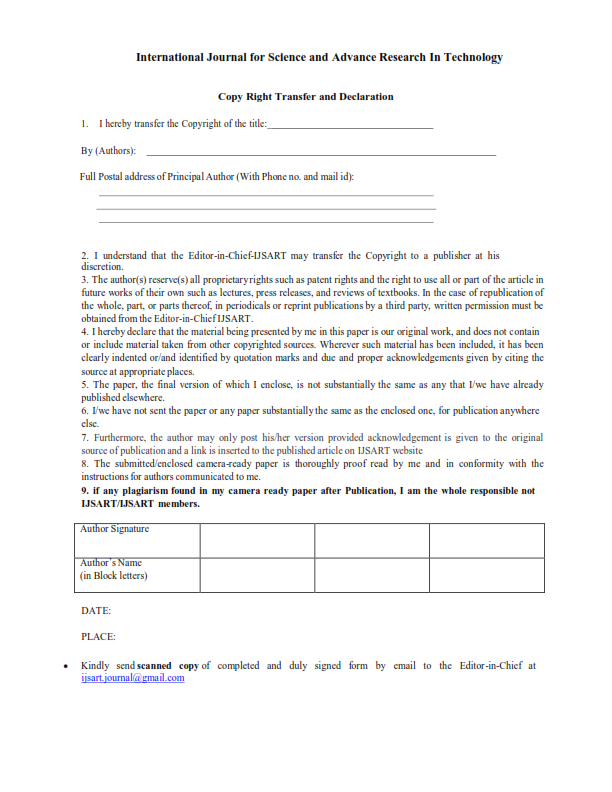
Copyright Form

Author(s)
Abstract
Polylactic Acid (PLA) Is A Leading Bioplastic In The Quest For Sustainable Alternatives To Petroleum-based Plastics. From Renewable Feedstocks Such As Corn Starch And Sugarcane, PLA Offers Advantages Including The Potential To Compost In Industrial Facilities, Reduced Greenhouse Gas Emissions, And High Mechanical Strength. In This Review, PLA Is Compared Side-by-side With Conventional Plastics Such As HDPE To Reveal Both Its Improved Environmental Advantages And Existing Technical Limitations. Brittleness, Heat Instability, And Dependence On Industrial Composting Facilities Have Rendered It Increasingly More Challenging To Have Widespread Applications For PLA. Nevertheless, The Improvement In Polymers Blending, Additive Technologies, Heating Techniques, And Chemical Recycling Is Increasingly Enhancing Its Performance. The Prospects Of PLA Are Also Highly Reliant Upon Government Subsidies In The Form Of Composting Mandates And Certification Standards. With Increasing Awareness And Demand For Plastic Waste Globally, PLA Is Perceived To Be A Material That Will Drive The Transition Towards A Circular, Sustainable Plastic Economy.
Keywords
Paper ID
IJSARTV11I4103319
Publication Date
April 25, 2025
Research Area
Green Chemistry