Impact Factor
Call For Paper
Volume 12 Issue 10
October 2026
Download Paper Format
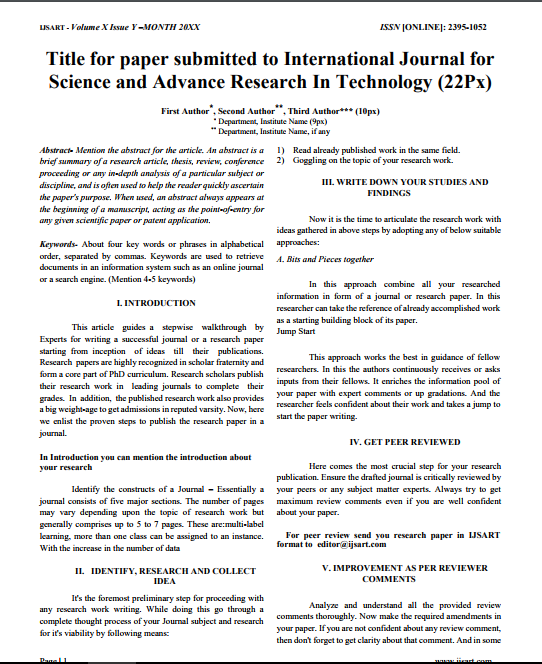
Copyright Form
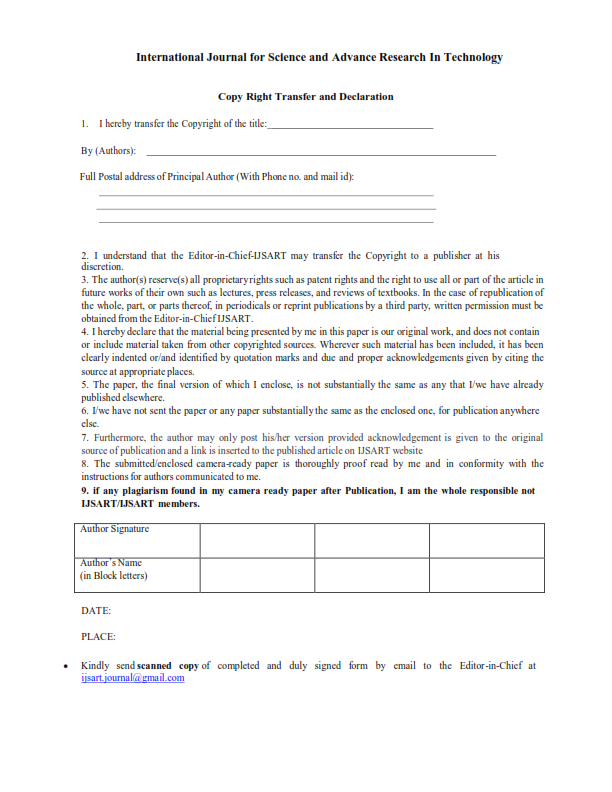

Author(s)
Abstract
Urban Plastic Waste Has Become One Of The Most Visible Environmental Stresses Associated With Rapid Urbanization, Changing Consumption Patterns, And Inadequate Waste Management Systems [5], [6], [7]. This Paper Examines How Plastic Waste Generated In Cities Can Be Transformed Into Value-added Products Rather Than Being Treated Only As Residual Waste. The Study Synthesizes Recent Literature On Urban Plastic Waste Management, Circular Economy Strategies, Plastic-sand Composite Construction Materials, Recycled Polymer Use In Textiles, Consumer Goods Manufacturing, And Pyrolysis-based Fuel Recovery [2], [6], [11], [12]. It Also Proposes An Integrated Urban Plastic Resource Conversion Framework And Includes An Illustrative Survey-based Analysis To Understand Public Awareness And Acceptance Of Recycled Plastic Applications. The Review Indicates That Weak Source Segregation, Low Recovery Efficiency, Contamination Of Recyclables, Limited Infrastructure, And Poor Market Linkages Remain Major Barriers In Urban Settings. At The Same Time, Plastic Roads, Paver Blocks, Composite Bricks, Recycled PET-based Textiles, Household Products, And Carefully Regulated Pyrolysis Systems Show Practical Promise When Deployed In The Correct Context. Literature On Plastic-sand Pavers Reports Strong Performance At Around A 30:70 LDPE-to-sand Ratio, While Pyrolysis Studies Commonly Investigate Temperature Windows Around 450–600 °C For Liquid-fuel-oriented Recovery [1], [2], [4] . The Paper Concludes That Cities Need A Combined Strategy Of Segregation, Decentralized Preprocessing, Standards-based Product Manufacturing, Producer Responsibility, And Demand Creation For Recycled Products. The Aim Is To Present An Original, Publication-ready Synthesis That Frames Plastic Waste As A Recoverable Urban Resource Within A Circular Economy.
Keywords
Paper ID
IJSARTV12I6105581
Publication Date
June 1, 2026
Research Area
ENTC