Impact Factor
Call For Paper
Volume 12 Issue 10
October 2026
Download Paper Format
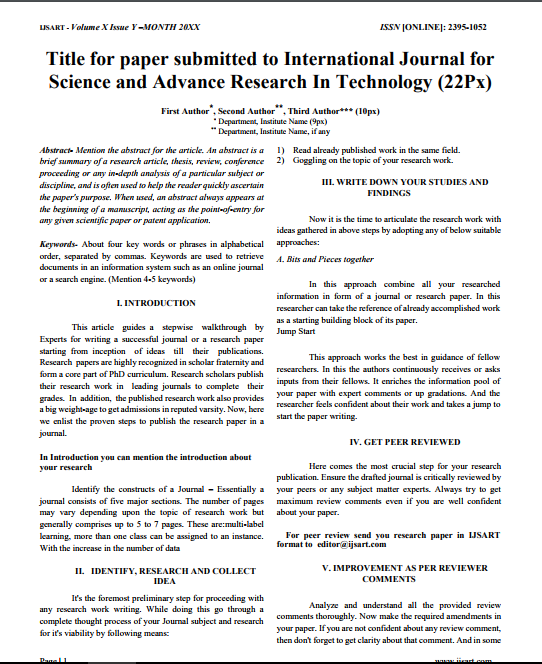
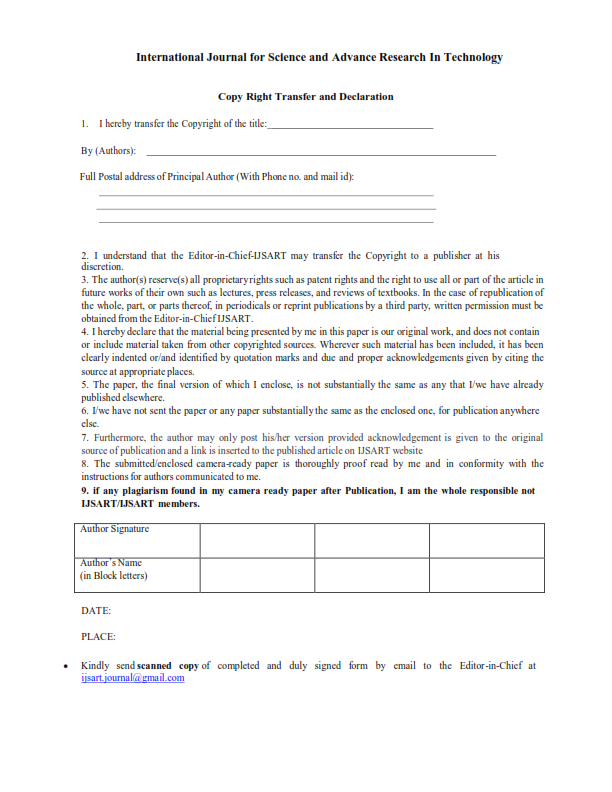
Copyright Form

Author(s)
Abstract
Low-density Polyethylene (LDPE) Is One Of The Most Widely Produced Synthetic Polymers With The Least Biodegradability, And Its Presence In Regions Around Plastic-processing Factories Has Been Noticed As A Unique Area Of Chronically Impacted Ecology That Has Received Significantly Less Attention Than Municipal Landfills. This Study Isolated Different Indigenous Soil Bacteria From The Waste Area Of The LDPE Manufacturing Plant And Other Area Residential And Institutional Places In The Modinagar–Ghaziabad–Meerut Belt Of Uttar Pradesh, India, That Can Use LDPE As A Source Of Carbon. A Total Of Fourteen Morphologically Different Bacterial Isolates Were Obtained From Seven Sampling Places Using Different Methods Like Serial Dilution And Enrichment Culture Using LDPE Mineral Salt Media; Four Of These Formed A Distinct Clear Zone In The LDPE Agar Measured Using Coomassie Brilliant Blue Technique And Such Clear Zones Were Between 3.2 Mm And 11.2 Mm In Diameter, And Hence Selected For Further Screening. For The Weight Loss Experiments From The Films, The Weight Loss After Incubation For 30 And 60 Days Were In The Range Of 4.83%-12.17% And 14.98%-23.62% Respectively, For The Four Isolates With Isolate With The Largest Clear Zone (B1, 11.2 Mm) Showed About 12.17% Weight Loss At 30 Days And 23.62% At 60 Days As Expected. Microscopic Examination Of Gram-stained Cells From Just One Of Such Isolates That Showed Superior Activity Revealed That Majority Of The Cells Are Small And Gram-positive And Mostly Appear As Short Rods And Coccobacilli. This Indicates That The Polymer Manufacturing Plant Waste Area May Contain Bacteria That Can Degrade LDPE Similar To Isolates From Municipal Dumps And Marine Sediments And Supports The Use Of Areas Of Industry That Have Undergone LDPE Treatment As A Good Target For Isolation Of Candidate Strains Useful
Keywords
Paper ID
IJSARTV12I7105794
Publication Date
July 29, 2026
Research Area
Biotechnology