Impact Factor
Call For Paper
Volume 12 Issue 10
October 2026
Download Paper Format
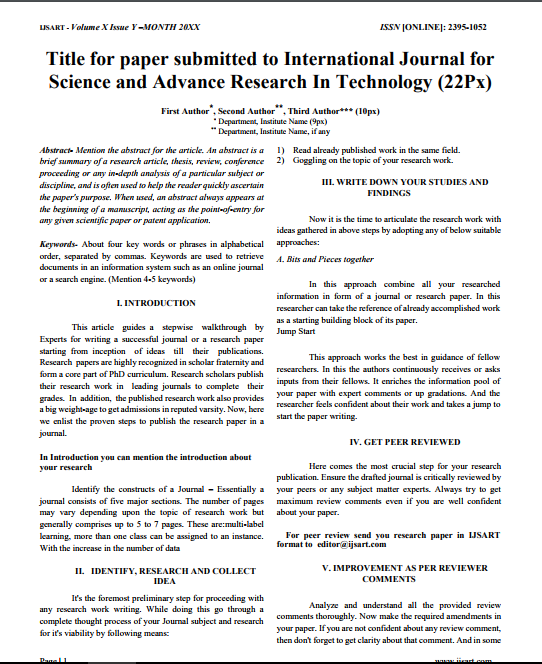
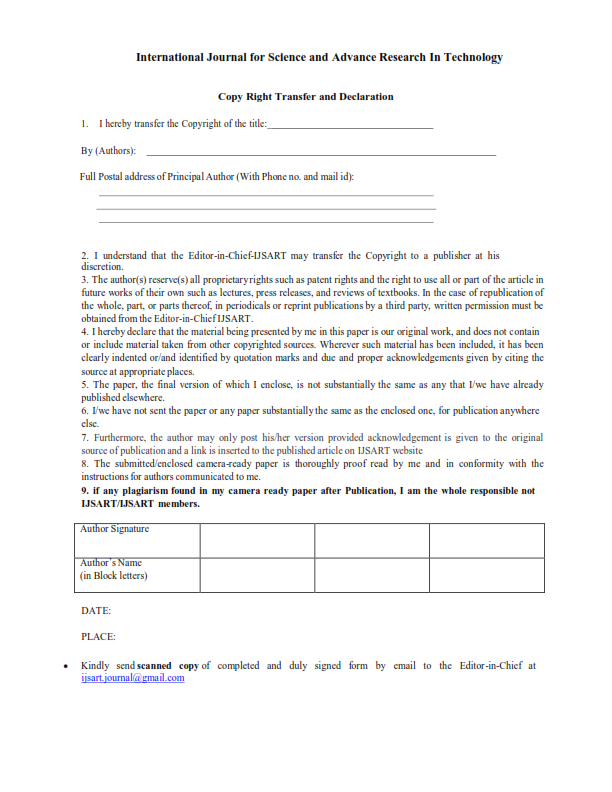
Copyright Form

Author(s)
Abstract
Due To The Fast-paced Development Of Cities And The Rise In The Number Of Cars, Parking Has Become Quite Challenging To Manage. Conventional Parking Systems Depend Mainly On Human Efforts, Tickets, Or Just Basic Sensors. Such Approaches Prove To Be Ineffective, Expensive, And Error-prone. Besides, There Is No Assurance Of Any Sort Of Safety, Making It Possible For Unauthorized Individuals And Car Thefts. The System Proposed Is Aimed At Solving Such Inefficiencies. The System Utilizes The Concept Of Deep Learning Smart Parking System. The System Utilizes Facial Recognition And License Plate Detection, Where The System Can Automatically Identify Who Is Accessing A Particular Parking Bay. High-definition Cameras Are Used To Take Images Of Both The Driver's Face And The License Plate Of The Vehicle. The Vehicle's Identity Is Determined Using The YOLO (You Only Look Once) Algorithm That Helps Detect And Recognize License Plates. Grassmann Algorithm Is Used For Authenticating Drivers In Order To Ensure That Only Authorized Personnel Will Be Allowed To Enter The Parking Facility. It Involves Two Methods Of Authentication, Making The Process Much More Secure While Reducing Dependency On Tangible Tokens Such As RFID Cards. Such An Automated Process Minimizes The Need For Human Labor And Therefore Results In Improved Management Of Parking Facility As Well As Traffic Flow. Moreover, The Cost Of Hardware Is Reduced Since There Is No Requirement Of Any Special IoT Sensor. Lastly, The Process Helps In Collecting Useful Data Regarding Traffic Movements.
Keywords
Paper ID
IJSARTV12I5105253
Publication Date
May 4, 2026
Research Area
Computer Science And Engineering