Impact Factor
Call For Paper
Volume 12 Issue 10
October 2026
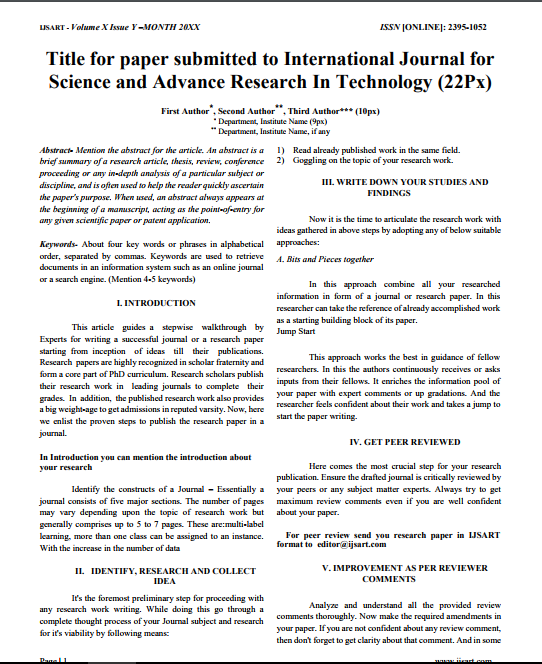
Download Paper Format
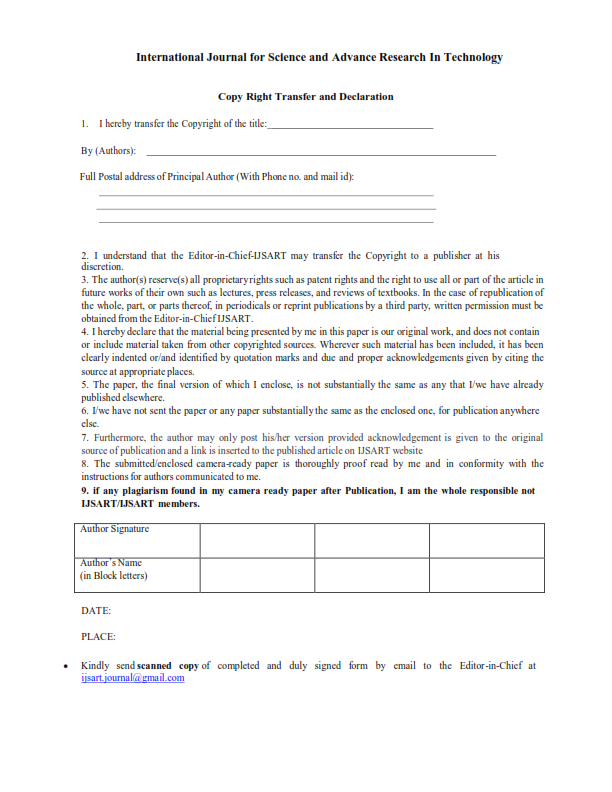
Copyright Form

Author(s)
Abstract
This Paper Presents A Comprehensive Comparative Analysis Of Recent State-of-the-art Deep Learning Models Developed For American Sign Language (ASL) Recognition, With A Focus On Those Benchmarked Using The WLASL Dataset. The Rising Demand For Accessible Human-computer Interaction Technologies Has Driven Advancements In Sign Language Recognition, Enabling More Inclusive Communication Tools For The Deaf And Hard-of-hearing Communities. Despite The Progress, ASL Recognition Remains A Complex Challenge Due To Signer Variability, Subtle Gesture Nuances, And The Need For Large-scale Annotated Datasets. In This Study, We Explore And Analyze Multiple Open-source ASL Recognition Models Including UniSign, SLRT, CVPR21Chal-SLR, SL-TechReport, SL-HWGAT, And Others Available On Repositories Such As PapersWithCode. These Models Represent A Wide Range Of Approaches—ranging From 3D Convolutional Neural Networks (CNNs) To Graph-based Models And Pose-enhanced Transformer Architectures. We Examine Each Model In Terms Of Architectural Design, Input Modalities (RGB, Pose, Or Fusion), Top-1 And Top-5 Accuracy, Computational Efficiency, And Scalability. Our Evaluation Highlights The Trade-offs Between Recognition Performance And Model Complexity, Identifies The Models Best Suited For Real-time Applications, And Uncovers Current Limitations In Signer Generalization And Pose Estimation Quality. We Also Discuss The Role Of Multi-modal Learning And Temporal Modeling In Achieving Higher Accuracy On WLASL Subsets Such As WLASL-100, WLASL-300, And WLASL-2000. The Findings Serve As A Benchmarking Guide For Future Research In Sign Language Recognition And Propose A Structured Path Toward Robust, Efficient, And Deployable ASL Recognition Systems For Real-world Applications Such As Sign-to-text Translators, Educational Tools, And Assistive Devices.
Keywords
Paper ID
IJSARTV11I5103710
Publication Date
May 29, 2025
Research Area
Artificial Intelligence