Impact Factor
Call For Paper
Volume 12 Issue 10
October 2026
Download Paper Format
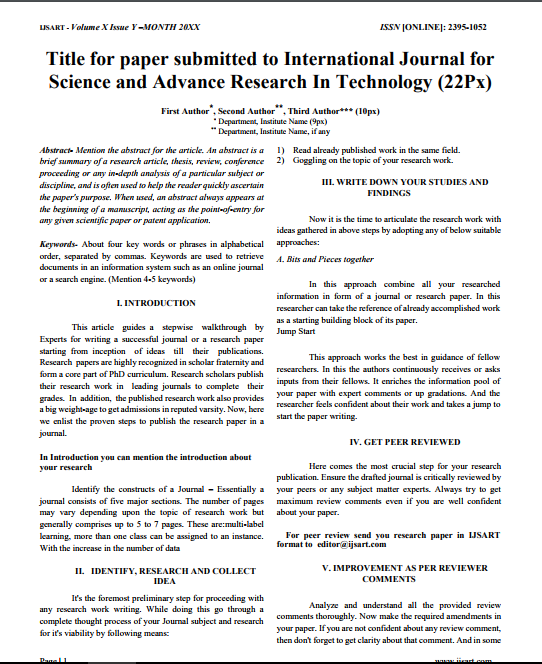
Copyright Form
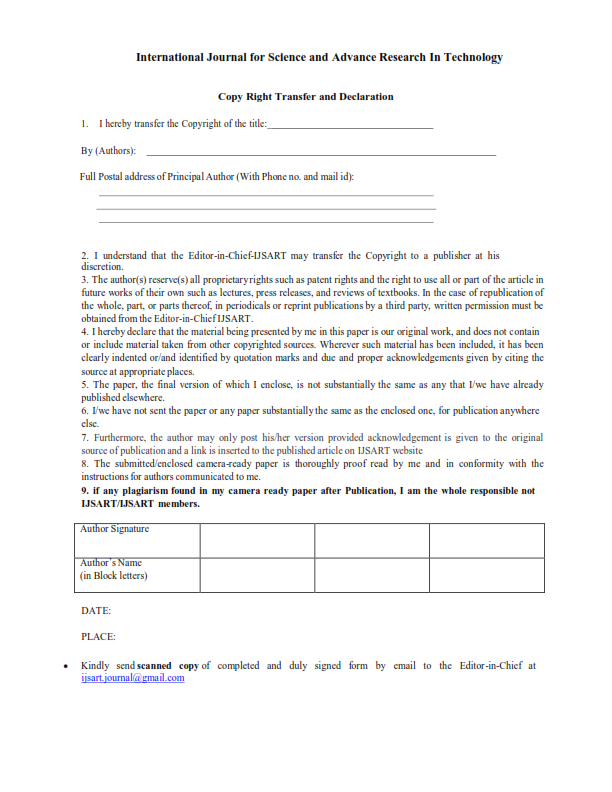

Author(s)
Abstract
The Present Study Deals With The Analysis Of A Framed Structure With And Without Knee Bracing Under Lateral Loading. Lateral Loads Due To Earthquake And Wind Action Produce Storey Displacement, Inter-storey Drift, Base Shear, Overturning Effect, And Additional Forces In Structural Members. In Ordinary Moment-resisting Frames, Lateral Stiffness Is Comparatively Low, Which May Lead To Excessive Deformation And Serviceability Problems. To Improve The Lateral Load Resistance, Knee Bracing Is Introduced As An Effective Structural System. In A Knee-braced Frame, The Main Diagonal Brace Is Connected To A Short Knee Element Near The Beam-column Joint. The Diagonal Member Provides Lateral Stiffness, While The Knee Element Acts As An Energy-dissipating Component During Seismic Excitation. In This Study, The Behaviour Of Braced And Unbraced Frame Systems Is Compared By Considering Important Parameters Such As Displacement, Drift, Stiffness, Member Stress, Velocity, Acceleration, And Overall Stability. The Structural Modelling And Analysis Are Carried Out Using Structural Analysis Software Under Lateral Load Conditions. The Results Indicate That The Provision Of Bracing Improves The Lateral Performance Of The Frame By Reducing Displacement And Controlling Dynamic Response. Therefore, Knee Bracing Can Be Considered An Efficient, Economical, And Practical System For Improving The Safety And Serviceability Of Framed Structures Under Lateral Loads.
Keywords
Paper ID
IJSARTV12I6105734
Publication Date
June 26, 2026
Research Area
Engineering