Impact Factor
Call For Paper
Volume 12 Issue 10
October 2026
Download Paper Format
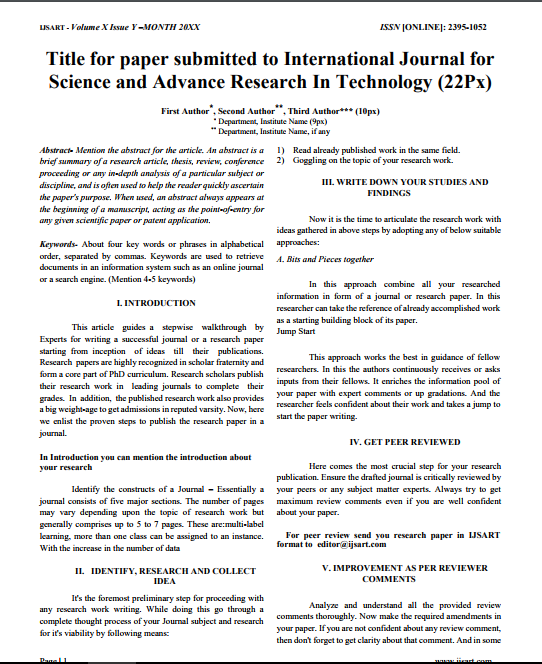
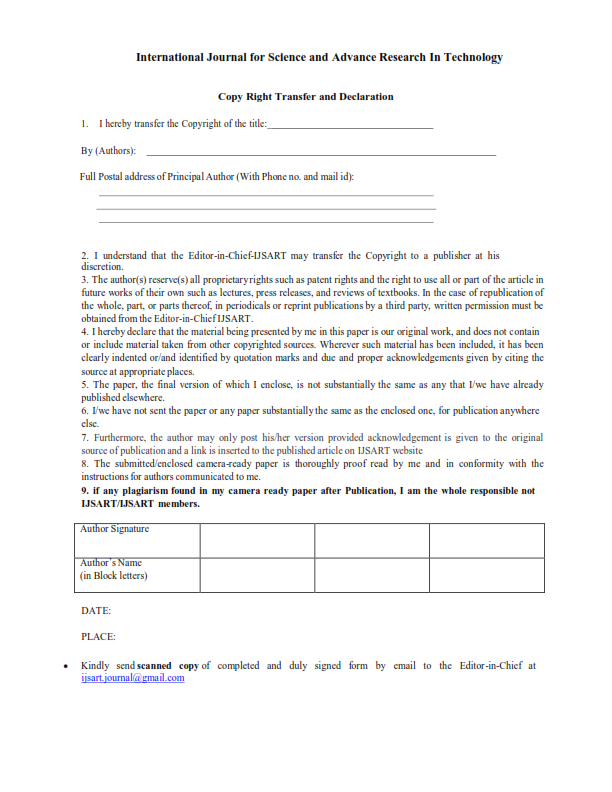
Copyright Form

Author(s)
Abstract
The Transition Towards Renewable Energy Is No Longer Just An Option But A Necessity In Addressing The Growing Challenges Of Climate Change, Environmental Degradation, And Energy Security. Fossil Fuels, Which Currently Dominate Global Energy Consumption, Are Finite And Contribute Significantly To Greenhouse Gas Emissions. Shifting To Renewable Energy Sources Such As Solar, Wind, Hydropower, And Biomass Offers A Sustainable Path Forward, Benefiting Both The Environment And Global Economies. Despite Its Benefits, The Migration To Renewable Energy Faces Challenges, Including The Need For Substantial Initial Investments, Technological Limitations, And Resistance From Entrenched Fossil Fuel Industries. Governments, Private Sectors, And International Organizations Must Work Together To Create Policies And Incentives That Encourage Renewable Energy Adoption. Public Awareness Campaigns, Subsidies, And Research Funding Are Critical In Overcoming These Barriers. To Develop A Sustainable Renewable Energy Infrastructure, We Need To Forecast The Amount Of Renewable Energy Production In Future And Meet Energy Demands In Future Through Renewable Sources. This Paper Presents A Comprehensive Review Of Statistical Models For Forecasting Renewable Energy Along With Associated Challenges That The Sector Faces. This Review Would Enable Future Research In Forecasting The Patterns In A Particular Renewable Energy Source.